
Dream x Destiny
How It WorksLive Public Funding
Dream x Destiny
Venture IntelligenceThe Adventure
How It WorksLive Public FundingVenture IntelligenceThe Adventure

Share the ❤️

DreamxDestinyVenture Intelligence

Discover

  • Ventures
  • Exhibition
  • Community
  • Talent Pool
  • High-Tech Terms

The Ecosystem

  • Venture Intelligence
  • The Adventure
  • Live Public Funding
  • Interactive Pitch Deck
  • 𝕏.com Spotlight

Company

  • FAQ
  • About Us
  • Feedback
  • Contact Us
  • Legal
The Handshake© Dream x Destiny Inc. All rights reserved.Report a bug
FestivusVenture page

Interactive Pitch Deck

Download PDF

Lumi on “Festivus”

Festivus

The festival app that still works when the signal does not.

Festivus is a companion for a specific festival you are actually going to, built on that festival's own published program rather than on a generic events feed. It currently covers three Berlin editions. You plan your days and it warns you when two things you wanted clash. You sign up and get a short crew code - the code is the login, there is no email and no password - and your crew shares one lobby and can drop a last location on the venue map. And a service worker keeps the whole thing - program, map, plan, artwork - working on a field with no bars of signal.
Open Festivus
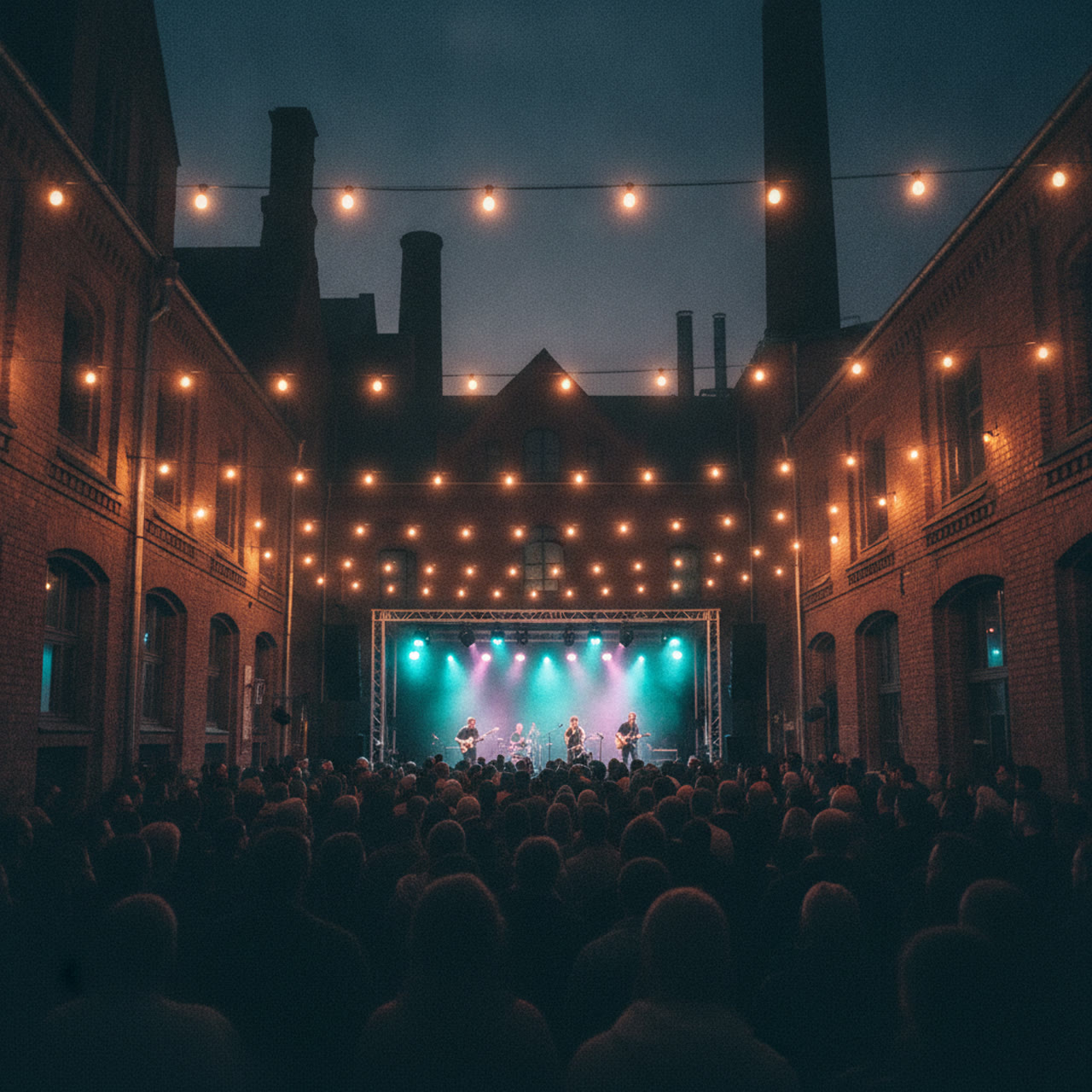
A festival crowd at night under stage light

Events · Interactive pitch

1 / 14

The problem

A festival is the one place where a phone stops being useful. Thirty thousand people share one cell tower, so the schedule will not load, the map will not load, and the group chat where everyone agreed to meet will not load either. The information you need most is the information you cannot reach.

  • The paper program works. That is the bar.
2 / 14

The idea

Build the festival app the other way around: assume there is no signal, and treat a connection as the exception. Everything you need on site - the program, the map, your plan, the artwork - is already on the phone before you walk in. And build it on the festival's own published program, so what it shows is what is actually happening.

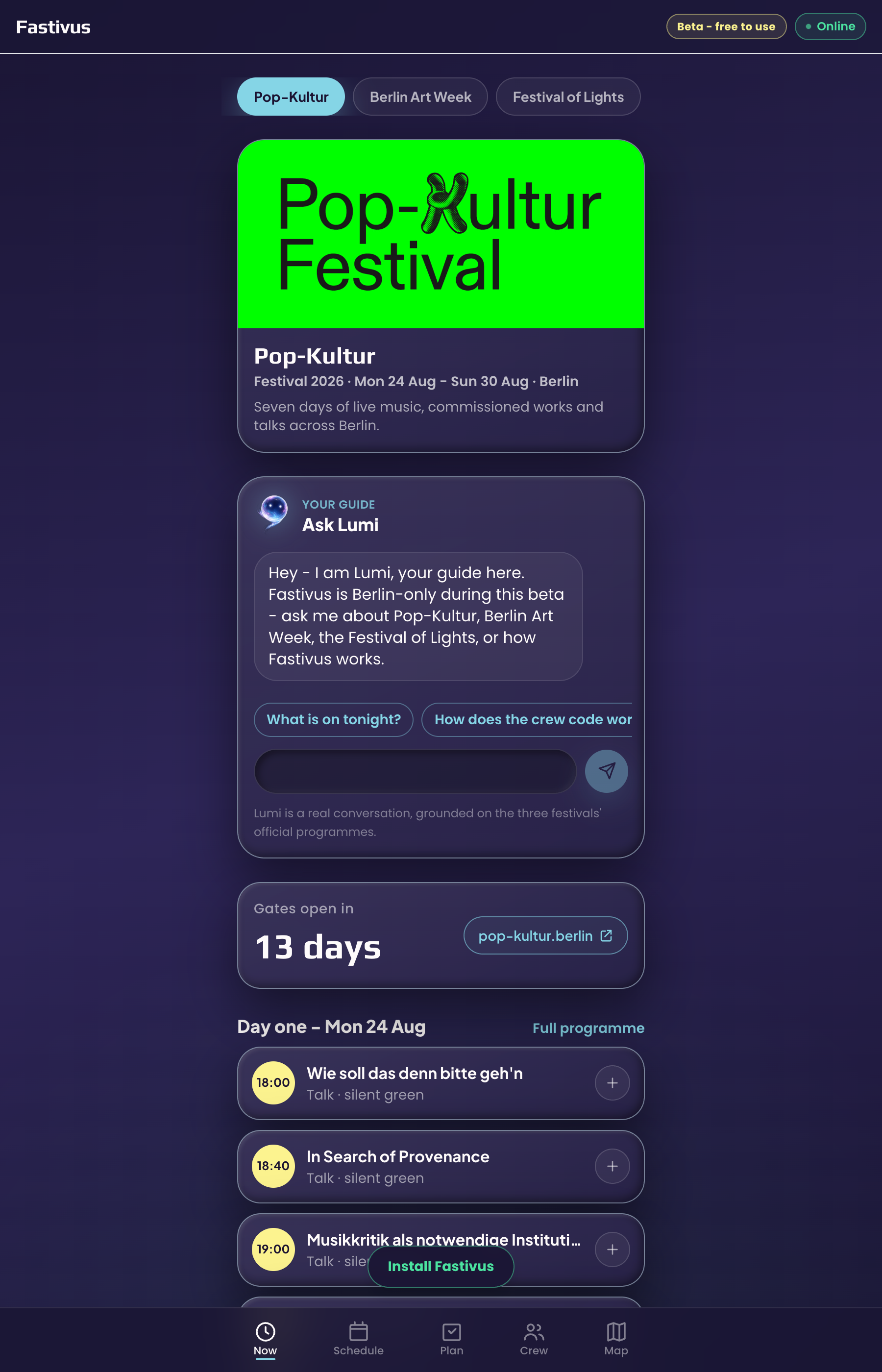
The live app - the three festivals, Lumi as the guide, and the countdown to gates
3 / 14

Three real festivals

Not a generic events feed. Festivus currently covers three Berlin editions with their own published programs: Pop-Kultur, seven days of live music, commissioned works and talks from 24 to 30 August. Berlin Art Week, five days and around a hundred art venues from 9 to 13 September, in its fifteenth edition. And the Festival of Lights, ten nights across nineteen landmarks from 9 to 18 October, free to visit.

  • Real acts, real times, real venues, taken from each festival's own program.
4 / 14

Your day, without clashes

The program runs one day at a time with a live feed of what is starting soon. Add things to your plan and Festivus tells you when two of them overlap, which is the decision every festival day is actually made of - the thing you want and the other thing you want, at the same time, on opposite sides of the city.

5 / 14

The crew code

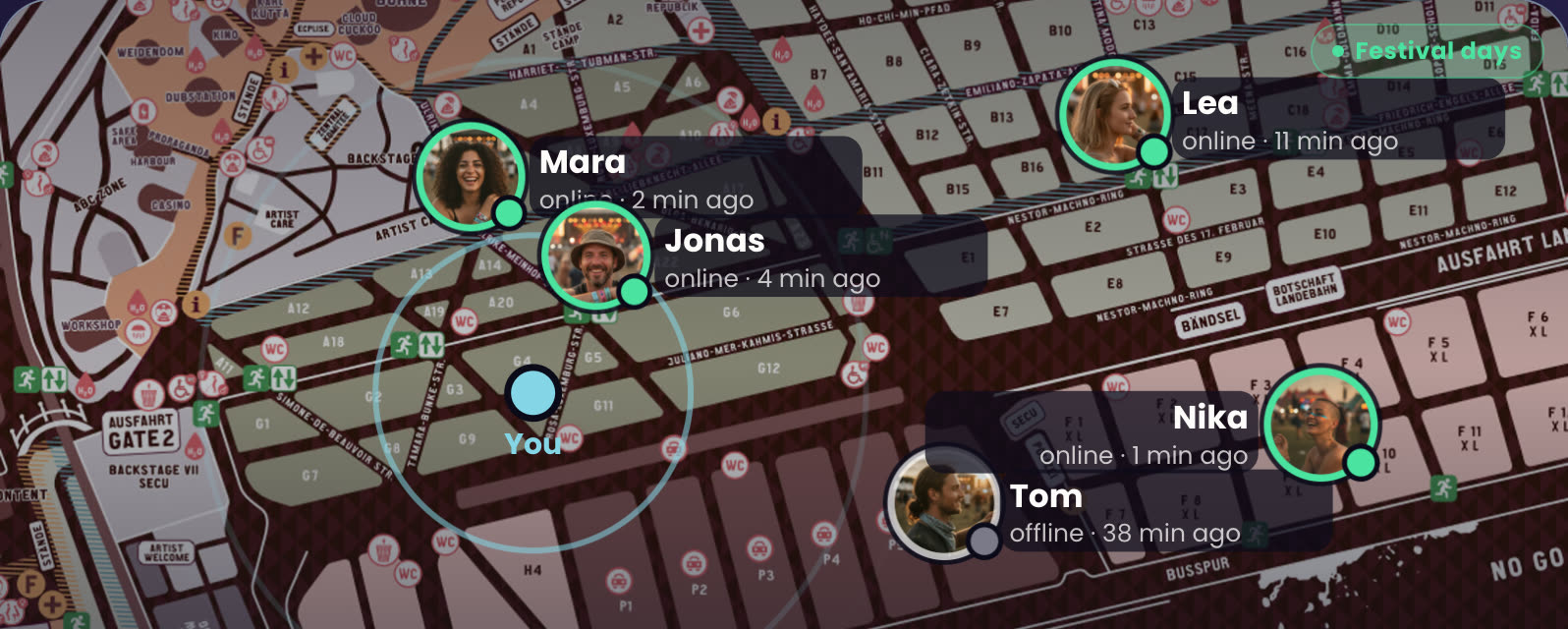
Signing up mints a short crew code. The code is the login - no email, no password, nothing to remember and nothing to lose. You give it to the people you came with, and from then on you share one open lobby chat for that festival and can drop a last location that pins you on the venue map.

  • Last locations, not live tracking. You choose when to drop one.
6 / 14

Lumi, on the program

Lumi rides along as a guide grounded on the three official programs. Ask her what is on tonight, which festival is next, or how the crew code works, and she answers from the programs themselves rather than from a general impression of festivals. Ask her something the programs do not contain and she says so.

7 / 14

What is built

All of it, and it is live and free to use right now. Three real programs, the day feed, the plan with clash warnings, crew codes, lobby chat, last-location check-ins on a real venue map, Lumi grounded on the programs, and the whole app working offline. Real accounts and real messages, stored properly rather than in the browser.

  • Beta, free, and installable on the phone.
8 / 14

How it makes money

Free during the beta, with no paywall on anything. Afterwards the companion stays free and Festivus Pro is a dollar a month for offline packs, multi-festival plans and the crew tools across a whole season. The second side is the festivals themselves - a branded presence carrying their official program, map and lobby.

9 / 14

The round

Festivus is raising a first round of $250,000 - the software-track figure. It is a runway requirement rather than a valuation: the operating layer, the fundraising costs, the human hours, the AI and infrastructure, the marketing, the legal and tax reserves and an operating buffer, added up and published line by line. Offers are non-binding, start at $1, and no money moves until a round closes and the company is incorporated.

  • No return is guaranteed. We recommend understanding the model, the business plan, and the risks before investing actual money. Consider independent professional advice if needed. Dream x Destiny does not provide investment advice.
10 / 14

What the demo shows

  1. Pick one of three real Berlin festivals - Pop-Kultur, Berlin Art Week, or the Festival of Lights.
  2. See the countdown to gates and the first day of the real program, with each act at its real time and its real venue.
  3. Ask Lumi anything about the festivals. She answers from the three official programs, not from a general memory of festivals.
  4. Add things to your plan, and Festivus tells you when two of them overlap.
  5. Sign up and get a crew code. The code is the login - no email, no password - and you share it with the people you came with.
  6. Drop a last location on the venue map so the crew can find each other, and keep using the whole app when the signal goes.
Open Festivus
Festivus, running
11 / 14

Investor view

What it is

A companion for a specific festival, built on that festival's own program, with clash-aware planning, a crew layer that works on a short code, and the whole app usable with no signal.

Who it is for

People with a ticket to a specific festival and the small group they are going with. The second side, not yet built, is the festival itself.

Why it is different

Most festival apps degrade to nothing when the signal goes, which is exactly when they are needed. This one is built the other way around, and the crew layer solves the problem people actually have on site - finding each other.

How the AI is actually used

Lumi is a guide grounded on the three official programs rather than a general assistant, so she answers about these festivals or says she cannot. The program data itself is not generated.

What is free, what is paid

Free: Everything, during the beta. The whole program, the plan, the crew lobby, the check-ins, the map and the offline packs, with no paywall anywhere. Paid: After the beta the companion stays free, and Festivus Pro is $1 a month: the offline packs, multi-festival plans and the crew tools for a whole season.

The growth loop

One person brings their crew, because a crew code is only useful when it is shared. That is a genuine invite mechanic. Whether it survives past one festival is unknown, since none of the three has happened yet.

12 / 14

Lumi's take

Strongest

It is finished and real. Three real programs, real accounts, real chat, real check-ins, real offline. Of the ventures here it is the one where "open it and use it" is a complete answer.

Weakest

The data pipeline. Each festival's program is read off that festival's own site, so festival number twenty costs roughly what festival number three cost. That is the ceiling on the whole thing.

What must be proven

That it holds up during a real festival with real crowds and real signal loss. That a festival will pay for a presence rather than pointing at its own app. That a dollar a month reaches enough people to matter.

Next thing to fix

Get one festival to agree to supply its program directly. It converts the biggest operational cost into a partnership and validates the second revenue side at the same time.

13 / 14

The first round

$250,000

First-round funding need

Funding sum is not a valuation. The first-round funding sum is the amount the venture needs to operate, build, launch and grow during its initial runway. It is calculated from expected operating costs, development resources, fundraising costs, marketing, reserves and contingency - not from an early-stage valuation.

A software venture funds people, infrastructure and reach. There is no physical unit to engineer, tool or manufacture, so the whole budget goes into building, running and growing the product for its first 18 months.

The Dream x Destiny operating layer and the funding platform's costs are part of the funding requirement, sized into the sum along with every other line. The founder does not pay them separately upfront: they are budgeted inside the amount raised rather than taken off the top of it. Dream x Destiny's platform revenue is a fixed operating fee, not a percentage of capital raised.

  • Dream x Destiny operating layer18 months at $6,200/month$111,600
  • Wefunder / funding-platform costs7.9% of the $250,000 first-round funding sum$19,750
  • Human-in-the-loop500 hours at $23/hour$11,500
  • Prepaid AI/API infrastructure$15,000
  • Software / tools / subscriptions$8,000
  • Deployment / cloud / monitoring$5,000
  • Marketing & user acquisition$35,000
  • Legal / accounting / compliance$7,500
  • Delaware C-Corporation / Stripe Atlas / administration$1,500
  • Tax / financial reserve$10,000
  • Operating buffer / contingency$25,150
  • Total$250,000
14 / 14