
Dream x Destiny
How It WorksLive Public Funding
Dream x Destiny
Venture IntelligenceThe Adventure
How It WorksLive Public FundingVenture IntelligenceThe Adventure

Share the ❤️

DreamxDestinyVenture Intelligence

Discover

  • Ventures
  • Exhibition
  • Community
  • Talent Pool
  • High-Tech Terms

The Ecosystem

  • Venture Intelligence
  • The Adventure
  • Live Public Funding
  • Interactive Pitch Deck
  • 𝕏.com Spotlight

Company

  • FAQ
  • About Us
  • Feedback
  • Contact Us
  • Legal
The Handshake© Dream x Destiny Inc. All rights reserved.Report a bug
Prin-TVenture page

Interactive Pitch Deck

Download PDF

Lumi on “Prin-T”

Prin-T

The printer is not the hard part. The software is.

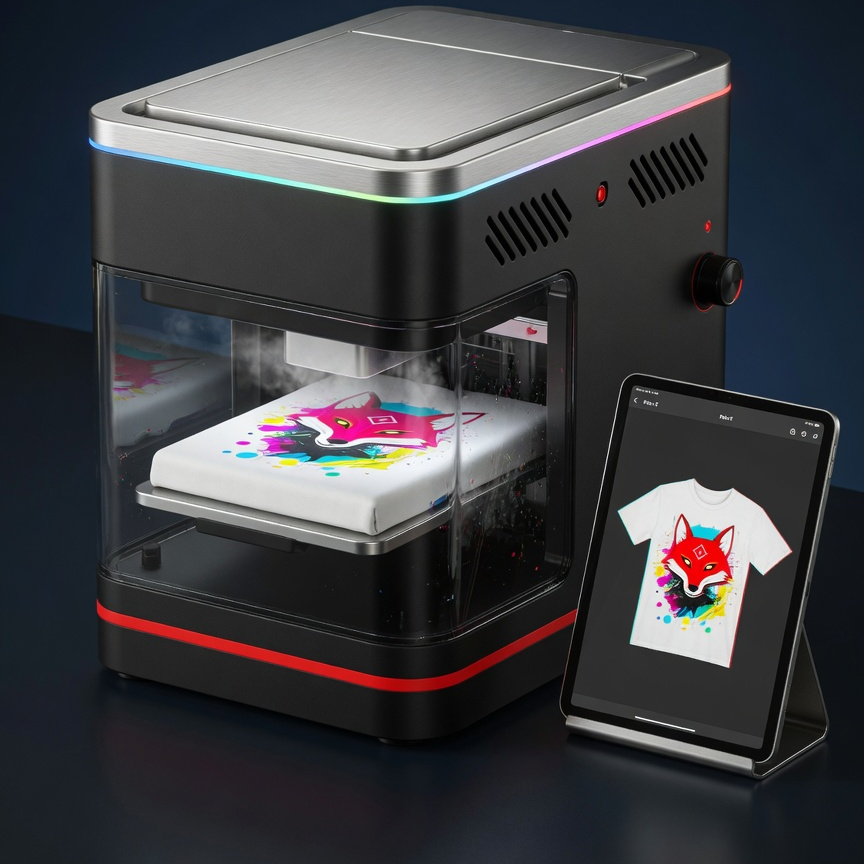
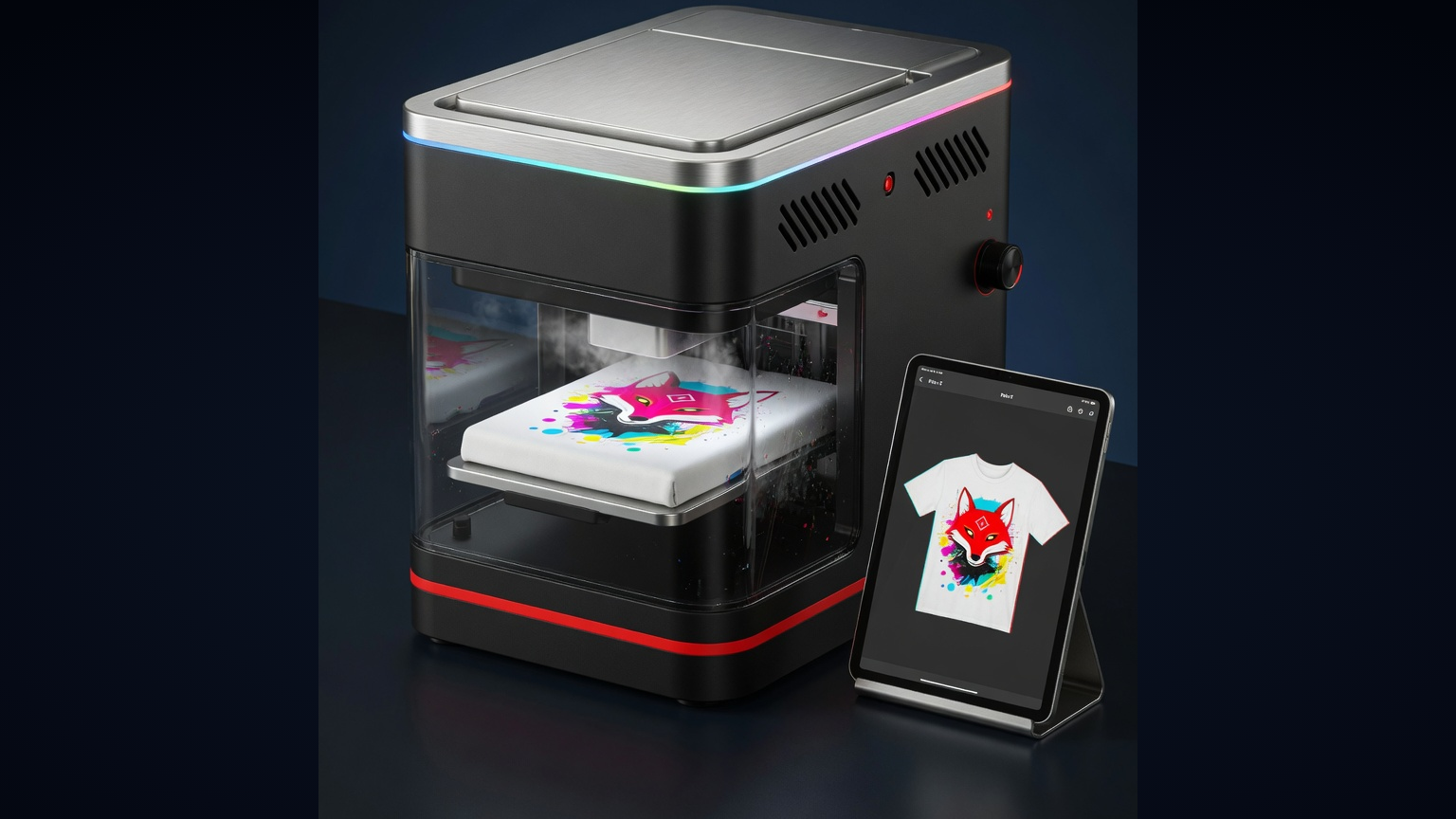
Prin-T is a desktop garment printer sold together with the software that drives it, rather than a machine with a locked manufacturer driver bolted on. You upload a design, choose the garment, and see how the ink will sit across collar folds and fabric ripples before anything is printed. You scan the fabric with the phone camera and the app proposes the profile for that material - droplet size, pass speed, cure - which you confirm before it reaches the printer. The engineering for the device itself is written down to the message level, and nobody has manufactured one yet.
Open the print studio
The Prin-T desktop textile printer in a dark studio

Hardware · Interactive pitch

1 / 14

The problem

Desktop garment printers got cheap. The software that drives them did not get better. It is raster-image software written for a print shop floor, priced in the hundreds, and it assumes an operator who knows what ink limit and pass speed mean. So a designer spends three thousand on a machine and then ruins garments learning what the manual does not say.

  • Cotton, a polyester blend and linen take ink completely differently. The software makes that your problem.
2 / 14

The idea

Sell the machine and the software as one thing, and make the software the reason to buy the machine. Upload a design, see it on the garment, scan the fabric with the phone you are already holding, confirm what the app thinks it is, print. No settings menu, no ink-limit arithmetic, no evening spent learning a profile you will use once.

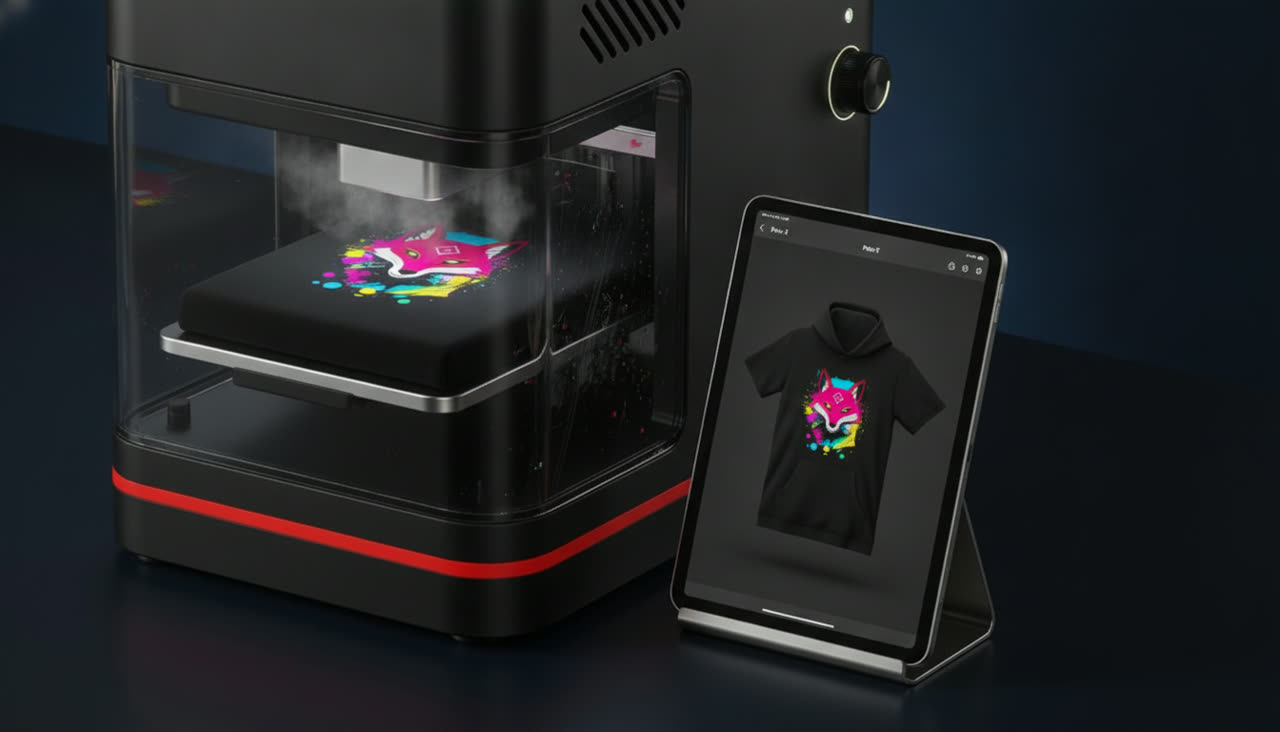
The 3D preview on a tablet beside the printer: the design wrapped over a hoodie's collar fold before anything is printed

Design render. No unit has been built.

3 / 14

Scan, then confirm

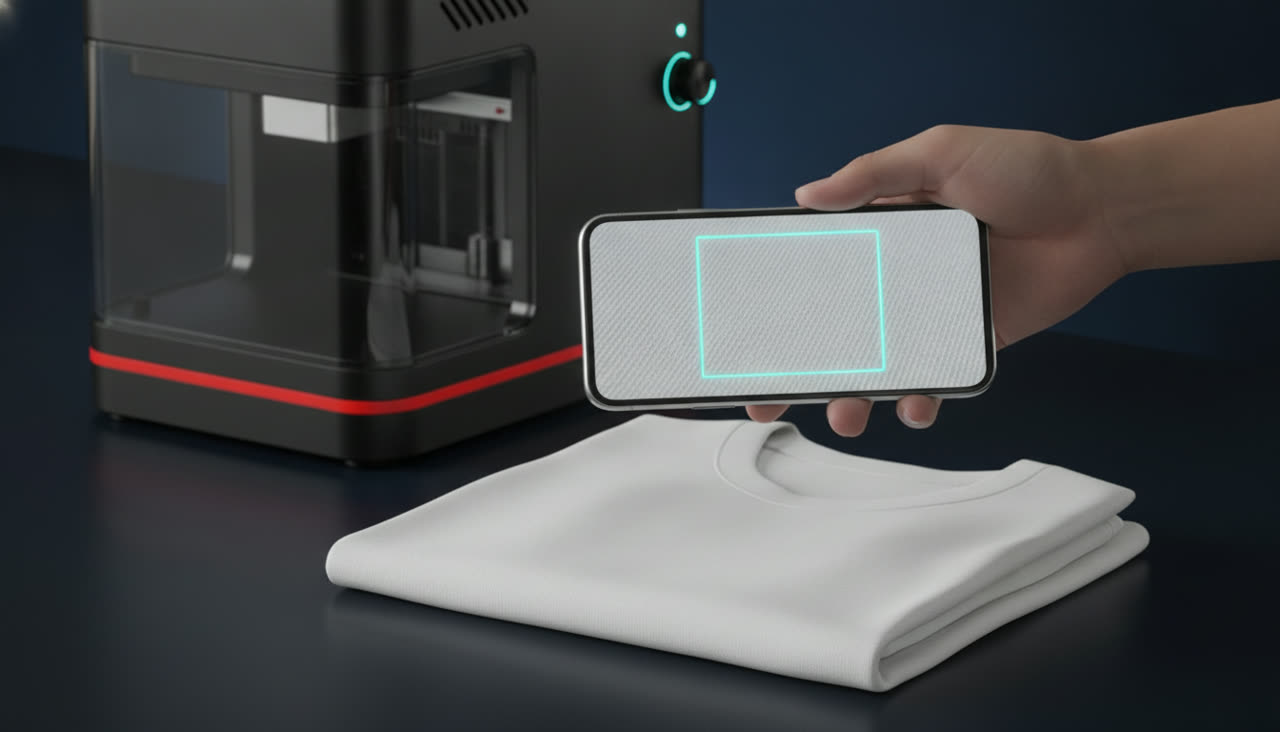
You point the camera at the fabric and the app proposes what it is and the profile that goes with it. Then you confirm it. That second step is deliberate: the profile that reaches the printer is always a human choice informed by the scan, never the scan on its own, because a wrong guess costs a garment and a scan that is unsure is worse than a person who looks.

  • The camera suggests. The person decides. That order is the design.
A phone held over the fabric on the platen, the app reading the weave and proposing a profile

Design render. No unit has been built.

4 / 14

The blueprint

The device is specified, not sketched. There is one transport - USB, chosen so raster bandwidth is not fighting a radio certification - and a defined message set between the app and the machine, with checksums on every message and a job that can only resume at a pass boundary. The firmware always finds its own home position on power-up rather than trusting a stored one, because power can be lost mid-travel.

  • Fifty turns of engineering review, fifteen catches, and a verdict of ready for engineer.
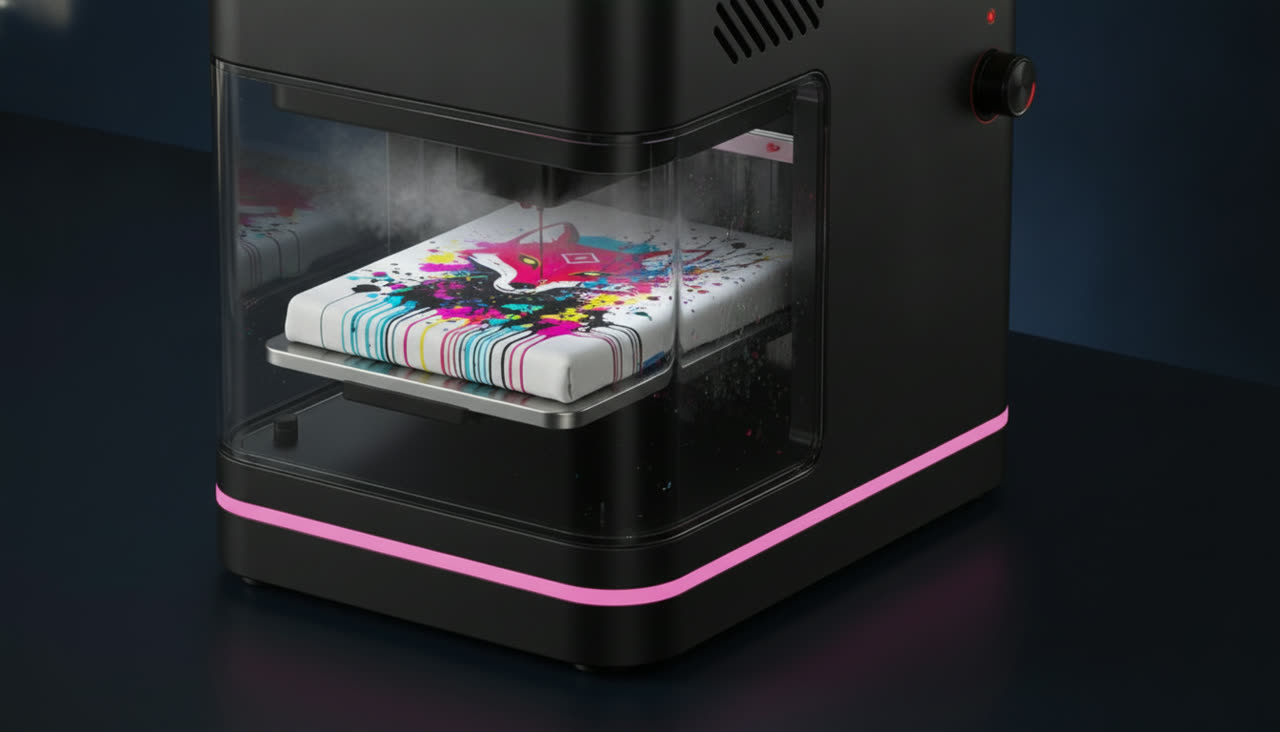
Mid-print: the head halfway along its rail laying wet ink onto a white t-shirt on the platen

Design render. No unit has been built.

5 / 14

The eight open questions

The blueprint ends with eight things nobody knows yet, each with the test that settles it. Surface temperatures across a long cure. Pinch force where fingers can reach. How many idle hours before white ink drops a nozzle. What the cure puts into the air of a home. Peak draw on a domestic circuit. Scorch thresholds per fabric. An electromagnetic pre-scan. And head height above a moving fabric, because a head strike destroys both the head and the garment.

  • A hardware venture that cannot name its unknowns has not looked for them.
6 / 14

What is built

The software is real and you can use it now: garment choice, design upload, a fabric scan through the camera, per-fabric profiles, the live preview, and a session that survives a reload. From Print onward it is simulated, and the app says so. No printer has been manufactured. There is no USB layer yet - the message specification is the work order for it.

  • Ready for engineer. That is a stage, not a shipping product.
The Prin-T device as designed
7 / 14

How it makes money

Prin-T is produced at a cost of about $550 per unit and sold for $600. The real revenue comes from high-margin recurring sales of replacement print heads, maintenance kits, and premium textile inks that customers must repurchase regularly. The machine is close to cost on purpose - it is the thing that puts the consumables in the room.

8 / 14

The round

Prin-T is in a live public first round, raising $500,000 - the hardware-track figure. It is a runway requirement rather than a valuation, and it is larger than a software round for named reasons: hardware engineering and prototyping, and the printer mechanics and electronics each iteration consumes, on top of the operating layer, the human hours, the marketing and the reserves every venture budgets. The full breakdown is published with the round. Offers are non-binding and start at $1: no card, no money moves, and nothing is binding until the round closes and the company is incorporated.

  • No return is guaranteed. We recommend understanding the model, the business plan, and the risks before investing actual money. Consider independent professional advice if needed. Dream x Destiny does not provide investment advice.
9 / 14

What the demo shows

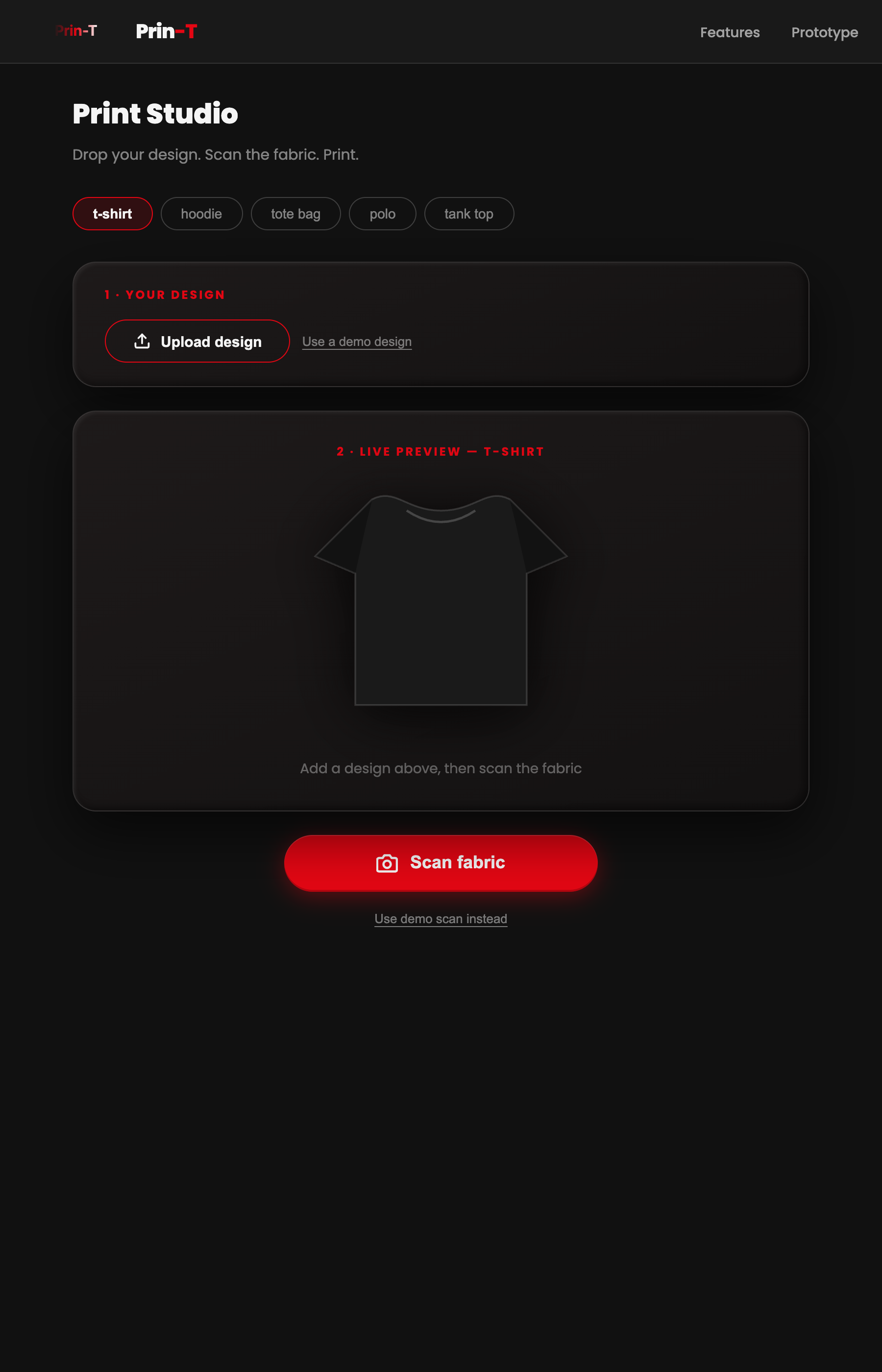
  1. Open the print studio and choose what you are printing on - t-shirt, hoodie, tote bag, polo, tank top.
  2. Upload your design, or use a demo design if you are just looking.
  3. The preview shows the design on that garment, so you see the placement before anything is committed.
  4. Scan the fabric with the camera - or use a demo scan - and the app reads the material.
  5. Confirm the fabric it proposes. The profile that reaches the printer is always a human choice informed by the scan, never the scan alone.
  6. From Print onward the run is simulated and labeled as such, because the device does not exist yet.
Open the print studio
Prin-T, running
10 / 14

Investor view

What it is

A desktop garment printer sold with the software that drives it, replacing locked manufacturer drivers with a camera fabric scan, a live garment preview, and a confirm step before anything prints.

Who it is for

Grok's brand work named the buyer precisely: the 28- to 42-year-old side-hustle designer who just bought a desktop garment printer and hit their first fabric mismatch at eleven at night.

Why it is different

Everyone else sells the machine and treats the software as a driver. Here the software is the reason to buy the machine, and it is the half that is finished.

How the AI is actually used

A vision model reads the fabric from the phone camera and proposes a profile. It never sets the profile on its own - the person confirms, and a mismatch at pre-flight blocks the print rather than guessing.

What is free, what is paid

Free: Nothing is free - this is a device you buy, with its platform included rather than sold as a separate license. Paid: The unit, and then the consumables: replacement print heads, maintenance kits and textile inks, which any working printer needs repeatedly.

The growth loop

Consumables. A unit sold near cost puts a customer in a repeat purchase for heads, kits and inks. That is a known model in printing and it is unproven for this product, because no unit exists.

11 / 14

Lumi's take

Strongest

The engineering blueprint. Transport, message set, firmware states, two named failure moments, and eight open questions each with the bench test that settles it. Very little seed-stage hardware arrives with its unknowns written down.

Weakest

No hardware exists, and the economics are estimates. A $50 margin on the unit only works if consumables genuinely recur, and no unit has been built, quoted or sold.

What must be proven

That the device can be manufactured near the estimated cost. That the eight open questions have acceptable answers, particularly the safety and emissions ones for a machine that cures in a home. That consumable repurchase is as regular as the model assumes.

Next thing to fix

Run the bench tests and get a real manufacturing quote. Every number in the business case sits on top of those two things.

12 / 14

The first round

$500,000

First-round funding need

Funding sum is not a valuation. The first-round funding sum is the amount the venture needs to operate, build, launch and grow during its initial runway. It is calculated from expected operating costs, development resources, fundraising costs, marketing, reserves and contingency - not from an early-stage valuation.

Prin-T is a physical product with moving parts. It carries printer mechanics on top of the electronics, so the engineering runs longer and the components cost more per iteration. That is the whole of the difference between this round and a software one.

The Dream x Destiny operating layer and the funding platform's costs are part of the funding requirement, sized into the sum along with every other line. The founder does not pay them separately upfront: they are budgeted inside the amount raised rather than taken off the top of it. Dream x Destiny's platform revenue is a fixed operating fee, not a percentage of capital raised.

  • Dream x Destiny operating layer18 months at $6,200/month$111,600
  • Wefunder / funding-platform costs7.9% of the $500,000 first-round funding sum$39,500
  • Human-in-the-loop900 hours at $23/hour$20,700
  • Hardware engineering & prototyping$90,000
  • Components / printer mechanics / electronics$45,000
  • Software / AI / APIs / tools$18,000
  • Deployment / infrastructure$5,000
  • Marketing$60,000
  • Legal / IP / compliance$10,000
  • Delaware C-Corporation / Stripe Atlas / administration$2,000
  • Tax / financial reserve$12,000
  • Operating buffer / contingency$86,200
  • Total$500,000
13 / 14

What the agents said

Gemini

Business - the F1 architecture audit

Specified it as a cloud-native, API-first platform with a mobile companion that exists for one reason - the camera has to be in your hand to scan the fabric - plus a real-time preview in the browser and an open gateway so printer manufacturers can integrate rather than be reverse-engineered. Its earlier read of the market is the sharper line: the buyer has already spent thousands on a printer and is bottlenecked by software written for a commercial shop floor. The audit itself was cut off by the provider partway through and is incomplete; what survives is architecture rather than a market judgment.

Grok

Brand and wedge - the F2 audit

Gave it the wedge "swipe to print high-end fashion on your desk" and named the buyer to the hour: the 28- to 42-year-old side-hustle designer who just bought a desktop garment printer and hit their first fabric mismatch at 11 p.m. Wrote a voice that speaks like a print-shop owner who cut out the middleman, with an explicit list of words it will not say - AI-powered, revolutionary, ecosystem, game-changer. It also proposed a different business from the one this venture now runs: a software seat at $29 a month or $199 for life, rather than a device sold near cost with recurring consumables.

Claude

The engineering blueprint, through Drift Catchers

Fifty turns of review, fifteen catches, and a verdict of ready for engineer. Settled on one transport so raster bandwidth is not fighting a radio certification, defined the message set with checksums and a resume that can only happen at a pass boundary, and required the firmware to find its own home position on power-up rather than trust a stored one. Designed for two failures by name - a mid-print disconnect parks and caps rather than half-curing a garment, and white ink recirculates on a timer because it settles within hours. Left eight questions open, each with the bench test that settles it. And reviewed the software honestly: "From Print onward the hardware does not exist, so printing is simulated - and labelled as a prototype, which is correct."

monday produced no assessment - its artefacts for this venture are floor completion gates, which passed. No ChatGPT assessment exists for this venture.

14 / 14