
Dream x Destiny
How It WorksLive Public Funding
Dream x Destiny
Venture IntelligenceThe Adventure
How It WorksLive Public FundingVenture IntelligenceThe Adventure

Share the ❤️

DreamxDestinyVenture Intelligence

Discover

  • Ventures
  • Exhibition
  • Community
  • Talent Pool
  • High-Tech Terms

The Ecosystem

  • Venture Intelligence
  • The Adventure
  • Live Public Funding
  • Interactive Pitch Deck
  • 𝕏.com Spotlight

Company

  • FAQ
  • About Us
  • Feedback
  • Contact Us
  • Legal
The Handshake© Dream x Destiny Inc. All rights reserved.Report a bug
RippleVenture page

Interactive Pitch Deck

Download PDF

Lumi on “Ripple”

Ripple

A speaker you watch.

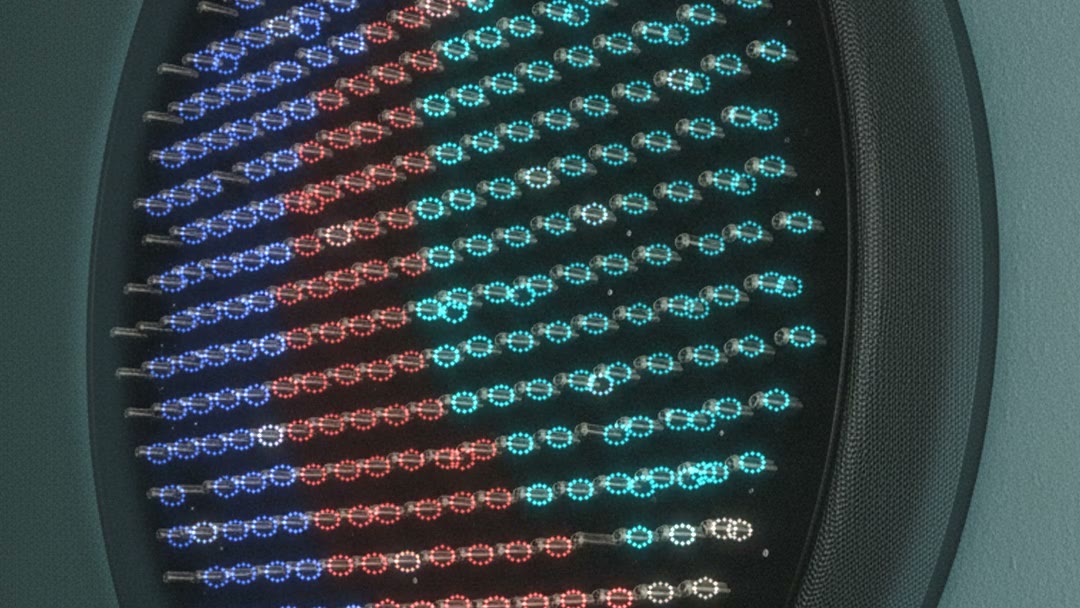
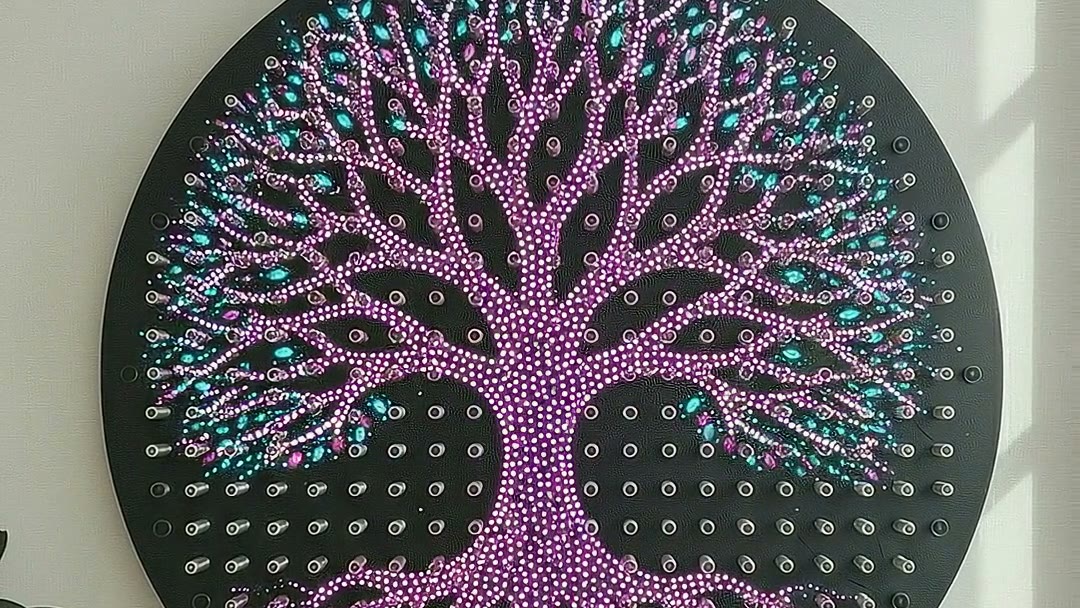
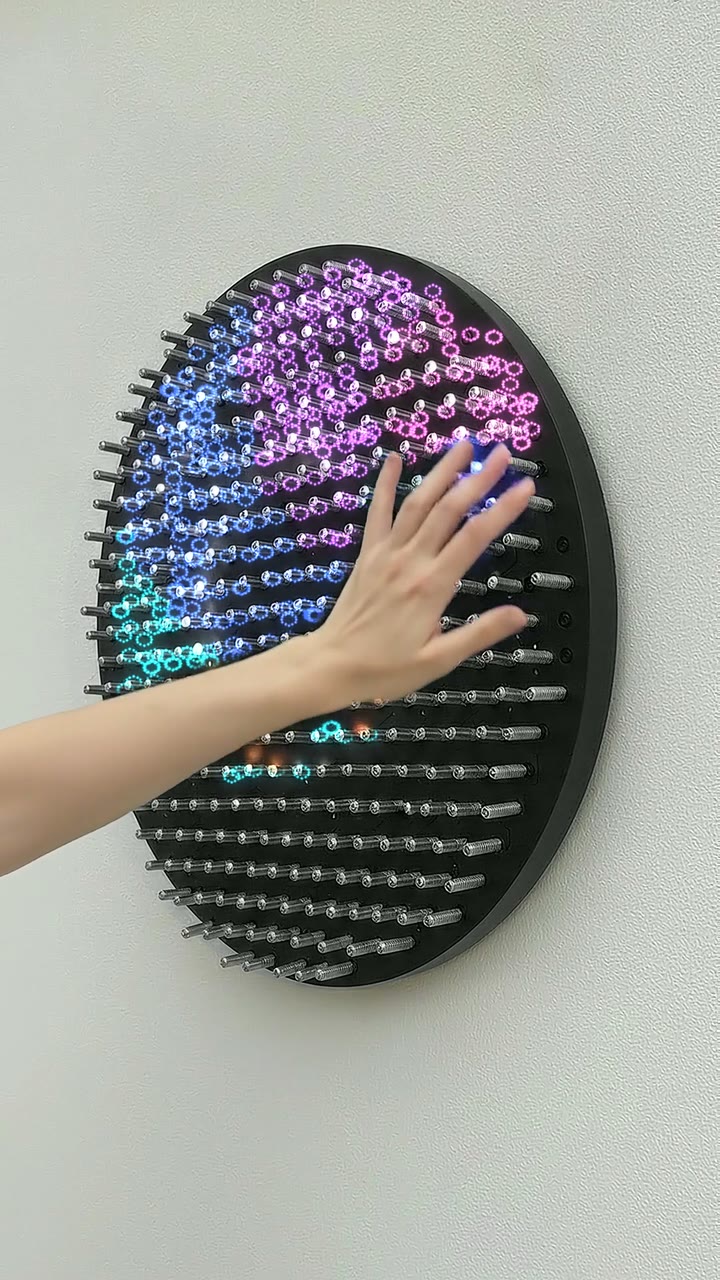
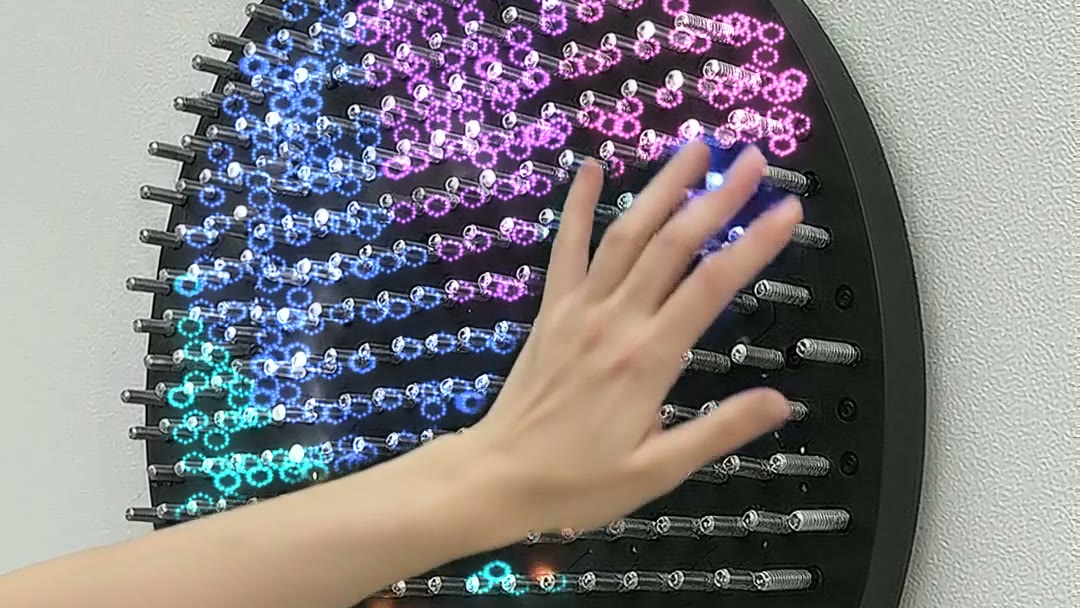
Ripple is a wall-hung object made of dozens of springs, each able to carry light. Touch the frame and one electric pulse travels across the array, spring to spring, so the ripple is physically handed from one piece of metal to the next rather than animated on a screen. It is also a Bluetooth speaker: send it music and the pulses ride the sound. Left alone it runs its own slow patterns. It is meant to hang like a picture and behave like an instrument.

Hardware · Interactive pitch
1 / 12

The problem

Almost nothing in a living room is worth looking at while it works. The speaker is a box you are meant to stop noticing. The smart light changes color and then has nothing else to offer. Wall art does not move at all. There is a gap between furniture that is beautiful and furniture that is alive, and very little sits in it.

  • Not a problem anyone complains about. Just a room with nothing in it that moves.
2 / 12

The idea

One object that is both. It hangs like a picture, and one electric pulse travels across dozens of springs so the light is physically handed from one to the next. Send it music and the pulses follow the sound. Leave it alone and it keeps its own slow rhythm. The music becomes something you can watch.

Ripple mid-track: cyan bass swells, pink mid-range rings and cream high-frequency flickers crossing the array at once

Simulation render. No unit has been built.

3 / 12

Spring to spring

The ripple is not a screen effect. A sequenced electric pulse runs across the array so each spring lights in turn, and what you see spreading is light being handed across metal. That is why it looks the way it does from across a room and why it looks different from every angle - the same reason a real surface does.

  • Physical, not rendered. That is the whole object.
Close on a dozen springs, each lit by its own ring of LEDs as a pulse of pink light passes through them

Simulation render. No unit has been built.

4 / 12

Two modes and a phone

Plug it in and the array runs a pairing pattern. Pair it over Bluetooth from the phone, and the app has two modes and two controls: music-reactive, where the pulses ride whatever is playing, and ambient auto mode, with sliders for speed and intensity. That is the entire interface, on purpose.

5 / 12

What exists

A design, a blueprint and an interactive prototype you can touch. The prototype shows the array at wall-viewing size, responds to a tap with a real propagating pulse, and falls into auto mode when left alone. What does not exist is the object: no unit has been built, no enclosure made, no drive electronics fabricated, and nothing has ever talked to hardware.

  • Ready for engineer. Not ready for a wall.
Ripple in auto mode with no music playing: slow soft cyan light wandering across the array on its own

Simulation render of auto mode. No unit has been built.

6 / 12

How it makes money

Sold directly, once, at around $249 a unit, to people buying for a room rather than for a spec sheet - through crowdfunding, online, and wherever a moving object photographs well. The plan projects manufacturing at $50 to $80 a unit at scale, margins of 50 to 60%, and volume above five thousand units in a first year.

  • Those are projections. No quote from a manufacturer sits behind them.
7 / 12

The round

Ripple is in a live public first round, raising $450,000 - the hardware-track figure. It is a runway requirement rather than a valuation, and it is larger than a software round for one reason: the object has to be engineered, prototyped and built again, so hardware engineering, components and materials are budgeted lines of their own on top of the operating layer, the human hours, the marketing and the reserves. The full breakdown is published with the round. Offers are non-binding and start at $1: no card, no money moves, and nothing is binding until the round closes and the company is incorporated.

  • No return is guaranteed. We recommend understanding the model, the business plan, and the risks before investing actual money. Consider independent professional advice if needed. Dream x Destiny does not provide investment advice.
8 / 12

Investor view

What it is

A wall-hung object of dozens of springs that hands one pulse of light from spring to spring when touched, and rides the music when something is streaming to it over Bluetooth.

Who it is for

People furnishing a room who want one object in it worth looking at. It sells the way design objects sell - by being seen - rather than the way electronics sell.

Why it is different

The ripple is physical. Light is handed across real metal rather than animated on a panel, which is why it reads differently from every angle and why a photograph of it does the selling.

How the AI is actually used

It is not, and nothing here would be improved by pretending otherwise.

What is free, what is paid

Free: Nothing. Ripple is an object you buy once. Paid: The device itself, sold directly, at around $249 depending on the edition.

The growth loop

Visual. An object that moves is an object people film, which is the entire distribution plan - crowdfunding and social. It has not been tested with an audience.

9 / 12

Lumi's take

Strongest

The object itself. It is immediately understandable, it wants to be filmed, and the interactive prototype already shows the behavior rather than describing it.

Weakest

Everything economic is an estimate. A $50 to $80 unit cost for a wall-sized array of individually driven elements has no bill of materials behind it, and the 50 to 60% margin is derived from that estimate.

What must be proven

That the array can be manufactured near the estimated cost. That a wall-mounted panel of dozens of springs survives shipping and years of use. That it passes the safety and electromagnetic testing a mains device needs.

Next thing to fix

Get a bill of materials and a manufacturing quote for the spring array. It is the number every other number in this pitch depends on.

10 / 12

The first round

$450,000

First-round funding need

Funding sum is not a valuation. The first-round funding sum is the amount the venture needs to operate, build, launch and grow during its initial runway. It is calculated from expected operating costs, development resources, fundraising costs, marketing, reserves and contingency - not from an early-stage valuation.

Ripple is a physical product. Beyond the software a venture always needs, it has to be engineered, prototyped, taken apart and built again - and every iteration costs components and materials, not only time. That physical development burden is why the first round is larger than a software round.

The Dream x Destiny operating layer and the funding platform's costs are part of the funding requirement, sized into the sum along with every other line. The founder does not pay them separately upfront: they are budgeted inside the amount raised rather than taken off the top of it. Dream x Destiny's platform revenue is a fixed operating fee, not a percentage of capital raised.

  • Dream x Destiny operating layer18 months at $6,200/month$111,600
  • Wefunder / funding-platform costs7.9% of the $450,000 first-round funding sum$35,550
  • Human-in-the-loop750 hours at $23/hour$17,250
  • Hardware engineering & prototypes$70,000
  • Components / electronics / materials$30,000
  • Software / AI / APIs / tools$15,000
  • Deployment / infrastructure$5,000
  • Marketing$55,000
  • Legal / IP / compliance$10,000
  • Delaware C-Corporation / Stripe Atlas / administration$2,000
  • Tax / financial reserve$12,000
  • Operating buffer / contingency$86,600
  • Total$450,000
11 / 12

What the agents said

Claude

The engineering blueprint and the build

Specified the object as it now is: a light array driven by sequenced pulses, paired over Bluetooth with a single one-byte setting deciding between music-reactive and ambient auto mode, and two sliders for speed and intensity. Made the pairing flow wait for the device's own light pattern to stop rather than let the phone declare success. And built the interactive prototype where the array can actually be tapped, which is the only part of Ripple anyone can experience today.

Ripple has no Gemini audit and no Grok audit. Neither was ever completed for this venture - the build brief says so in as many words and instructed the build to work from the vision alone. That is a real gap in this venture, not an omission from this pitch. monday produced no assessment either, only a floor completion gate, and no ChatGPT assessment exists.

12 / 12