
Dream x Destiny
How It WorksLive Public Funding
Dream x Destiny
Venture IntelligenceThe Adventure
How It WorksLive Public FundingVenture IntelligenceThe Adventure

Share the ❤️

DreamxDestinyVenture Intelligence

Discover

  • Ventures
  • Exhibition
  • Community
  • Talent Pool
  • High-Tech Terms

The Ecosystem

  • Venture Intelligence
  • The Adventure
  • Live Public Funding
  • Interactive Pitch Deck
  • 𝕏.com Spotlight

Company

  • FAQ
  • About Us
  • Feedback
  • Contact Us
  • Legal
The Handshake© Dream x Destiny Inc. All rights reserved.Report a bug
VividVenture page

Interactive Pitch Deck

Download PDF

Lumi on “Vivid”

Vivid

See it on your skin before anyone picks up a needle.

Vivid answers the two questions that stop people getting tattooed: what will it actually look like on me, and who does it for how much. You pick a design from a curated gallery or upload your own, hold your camera to the place you are considering, and place the design on your own skin in the live camera view - move it, scale it, turn it until it sits right. When one of them is the one, Vivid takes it to real studios and comes back with offers. It is free for the person, always. The studios are the paying side.

Try it on your own skin
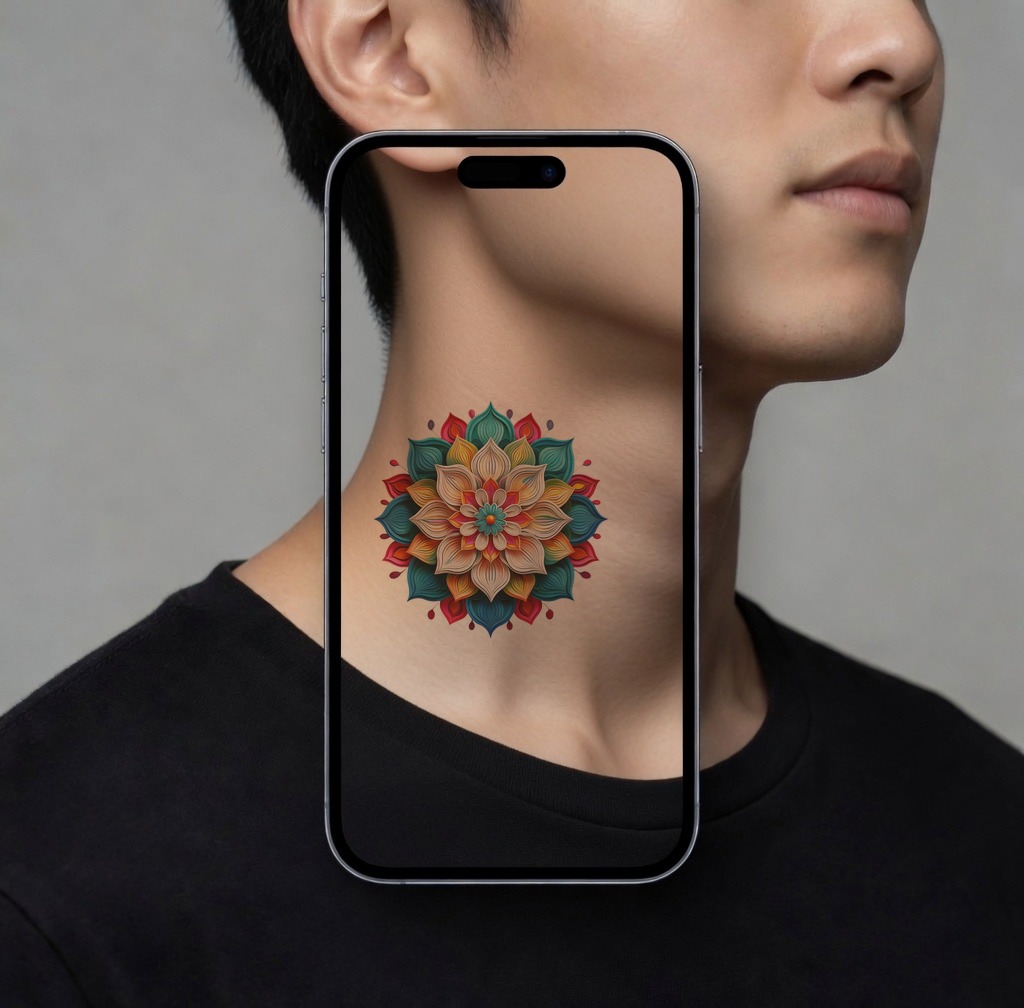
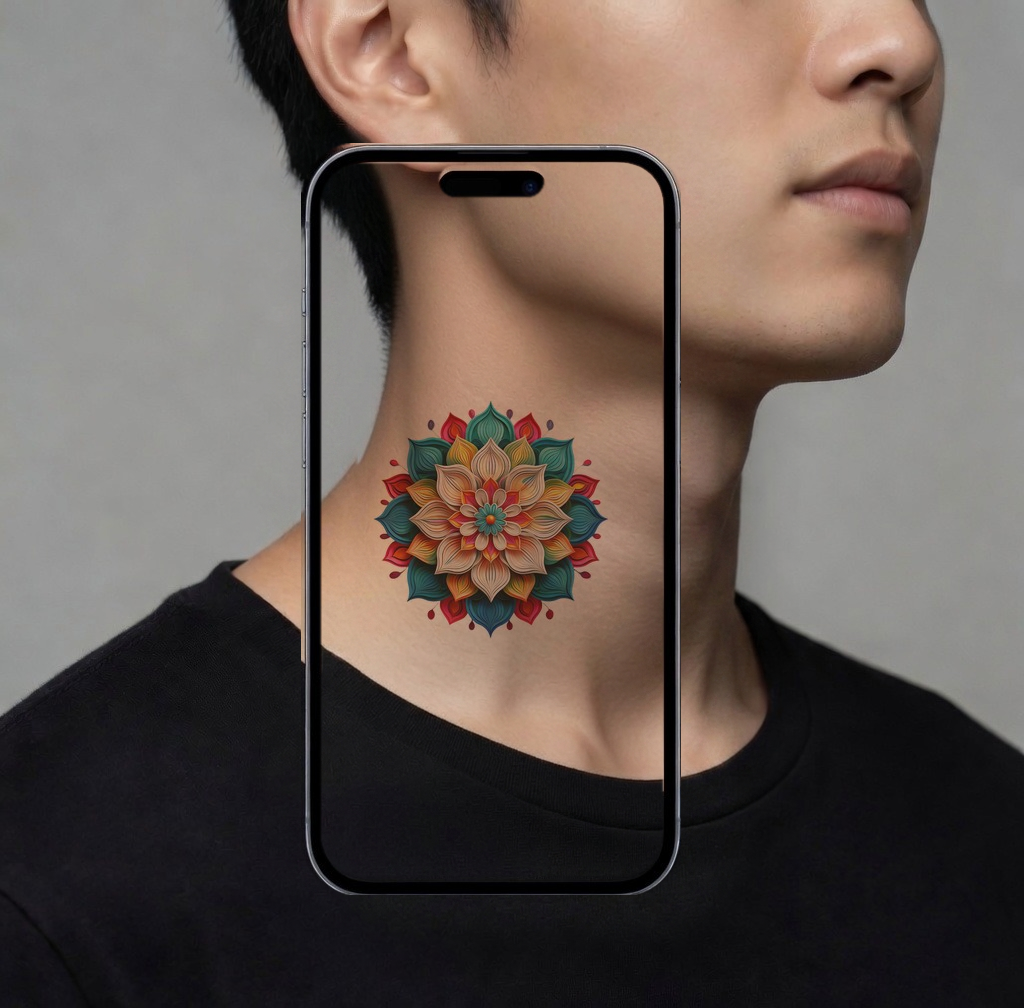
Vivid's key art - a tattoo previewed on the neck through a phone

Marketplace · Interactive pitch

1 / 15

The problem

A tattoo is one of the few purchases that cannot be returned, and almost nobody sees it before they commit to it. A design on a screen tells you nothing about how it sits on a collarbone. So the decision gets postponed for months, or it gets made in a chair with the stencil already on.

  • The second question is as bad as the first: who does this, and what should it cost?
2 / 15

The idea

Let the person see it on their own skin first, then let the studios come to them. Two hesitations, both removed before anyone is contacted - and the person is not asked to pay for either. Vivid is free for the human being. The studios pay, because a person who has already chosen a design and looked at it on their own body is a client, not an inquiry.

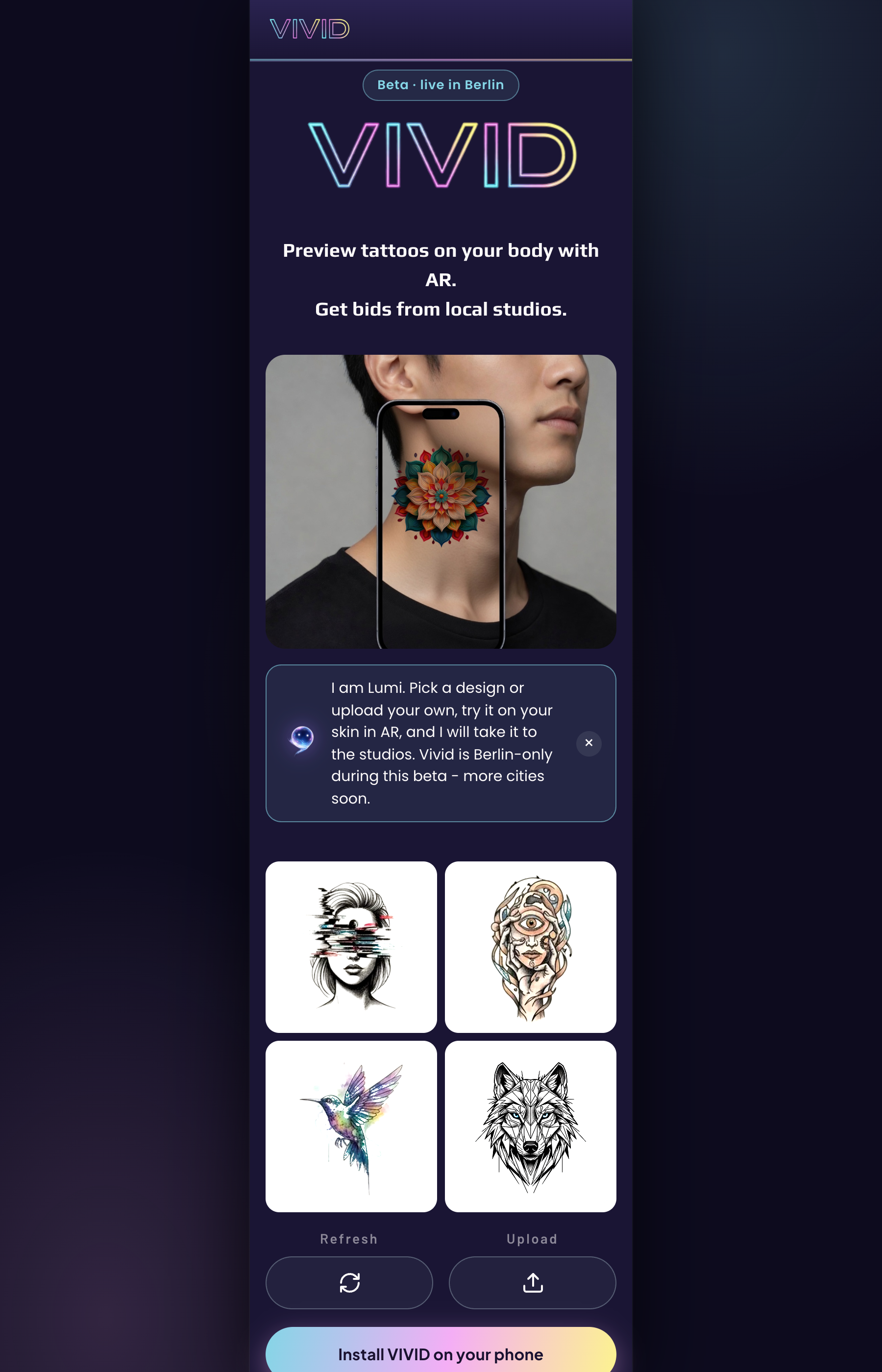
The live app - the curated gallery, with Lumi explaining that the beta is Berlin-only
3 / 15

The gallery, or yours

The designs are curated, not generated. You browse a gallery of ready-made pieces, refresh it for a different set, or upload an image you already have - a drawing, a photograph, something an artist sent you. Vivid does not make the art and does not claim to.

  • No prompt box, no generation, no paywall.
4 / 15

On your skin

Point the camera at the place you are considering and the design appears over the live view. You place it yourself: one finger moves it, two fingers scale and turn it. Move the camera and you see it from another angle. It runs in the browser on the phone you already have, with no app to install and nothing uploaded to see it.

  • You position it by hand. Vivid does not track your body, and does not claim to.
5 / 15

Then the studios

When one design is the one, you finalize it - size, color, placement, an email, and an Instagram handle if you want to give one - and Vivid takes it to studios. In this beta that means ten hand-picked Berlin studios, each with a checked Instagram, address and site. Offers come back to you. You never pay Vivid anything.

6 / 15

Consent, in writing

Vivid sends a photograph of someone's body to strangers. So consent is typed, not ticked: the person writes "I confirm" against a line that names exactly who may contact them and how. The wording is versioned and stored with the request, so an old record still shows what that person actually agreed to.

  • The request is written down before the mail goes out, not after.
7 / 15

What is built

Live in Berlin, in beta, free. The gallery, the upload, the camera try-on, the finalize step, the typed consent, the stored request and the outreach to ten curated studios all work today. What is not built: the studio side. There are no studio accounts, no studio dashboard, no bidding inbox, and nothing bills anybody.

  • Berlin only. Every other city joins a list and is told so on the first screen.
8 / 15

How it makes money

Vivid is free for the users. Studios get one month for free. Afterwards, to keep getting session requests, a studio pays $49 a month. The person is never the customer, at any point, in any version of this.

9 / 15

The round

Vivid is in a live public first round, raising $250,000 - the software-track figure. It is a runway requirement rather than a valuation: the operating layer, the fundraising costs, the human hours, the AI and infrastructure, the marketing, the legal and tax reserves and an operating buffer, added up and published line by line. Offers are non-binding and start at $1: no card, no money moves, and nothing is binding until the round closes and the company is incorporated.

  • No return is guaranteed. We recommend understanding the model, the business plan, and the risks before investing actual money. Consider independent professional advice if needed. Dream x Destiny does not provide investment advice.
10 / 15

What the demo shows

  1. Open Vivid. It says up front that the beta is live in Berlin, so nobody discovers that after choosing a design.
  2. Pick a design from the curated gallery, refresh it for a different set, or upload an image of your own.
  3. Point the camera at the place you are considering. The design appears over the live view of your skin.
  4. Place it yourself - one finger to move it, two to scale and turn it - until it sits the way it would sit.
  5. Finalize: size, color and placement, your email, and an Instagram handle if you want to give one.
  6. Type "I confirm" to the consent line, and the request goes to real Berlin studios for offers.
Try it on your own skin
Vivid, running
11 / 15

Investor view

What it is

A free camera try-on for tattoos, and a route from a chosen design to real studio offers. Curated designs or your own image, placed on your skin in the live camera view, then taken to studios on your behalf.

Who it is for

The person who has wanted a specific tattoo for months and has not booked it. The studios are the paying side, and they are being introduced to someone who has already decided what they want.

Why it is different

Gemini's strategy work put it between inspiration and booking - not competing with the places people browse, and not competing with the studio, but qualifying the client before either. Revenue scales with the studio network rather than with compute.

How the AI is actually used

Barely, and that is deliberate. There is no generation - the designs are curated or the person's own - and no body-tracking model. Lumi guides the person through the flow inside the app. The camera try-on is a live feed with a design the person positions by hand.

What is free, what is paid

Free: Everything the person does: the gallery, uploading your own image, the camera try-on, and sending the design out for offers. Free forever, not free for now. Paid: Studios. The first month is free; after that a studio pays $49 a month to keep receiving session requests.

The growth loop

Local and city-shaped: once four or five studios in one city are on it, offers start to compete and the app becomes the first thing a person opens. Nothing outside that city benefits. No such density exists yet, in Berlin or anywhere.

12 / 15

Lumi's take

Strongest

The consent design. A typed confirmation, versioned wording stored with the record, and a plain statement of what Vivid is and is not answerable for once an image of someone's body leaves. In a category that handles photographs of people, that is a real and checkable difference.

Weakest

Half the marketplace does not exist. There are no studio accounts, no offer inbox and no billing, so the entire revenue model - $49 a month from studios - has never been put to a single studio.

What must be proven

That a studio pays after the free month. That ten curated studios in one city is enough density for offers to feel like offers. That people finish the flow rather than trying the camera and leaving.

Next thing to fix

Build the studio side and charge somebody. Until a studio has been billed and stayed, the business model is a sentence rather than a finding.

13 / 15

The first round

$250,000

First-round funding need

Funding sum is not a valuation. The first-round funding sum is the amount the venture needs to operate, build, launch and grow during its initial runway. It is calculated from expected operating costs, development resources, fundraising costs, marketing, reserves and contingency - not from an early-stage valuation.

A software venture funds people, infrastructure and reach. There is no physical unit to engineer, tool or manufacture, so the whole budget goes into building, running and growing the product for its first 18 months.

The Dream x Destiny operating layer and the funding platform's costs are part of the funding requirement, sized into the sum along with every other line. The founder does not pay them separately upfront: they are budgeted inside the amount raised rather than taken off the top of it. Dream x Destiny's platform revenue is a fixed operating fee, not a percentage of capital raised.

  • Dream x Destiny operating layer18 months at $6,200/month$111,600
  • Wefunder / funding-platform costs7.9% of the $250,000 first-round funding sum$19,750
  • Human-in-the-loop500 hours at $23/hour$11,500
  • Prepaid AI/API infrastructure$15,000
  • Software / tools / subscriptions$8,000
  • Deployment / cloud / monitoring$5,000
  • Marketing & user acquisition$35,000
  • Legal / accounting / compliance$7,500
  • Delaware C-Corporation / Stripe Atlas / administration$1,500
  • Tax / financial reserve$10,000
  • Operating buffer / contingency$25,150
  • Total$250,000
14 / 15

What the agents said

Gemini

Business - the F1 strategy audit

Described it as a curated try-on app and put the win in one sentence: it "kills the two hesitations before getting inked - what will it look like on me, and who does it, for how much." Located it precisely in the funnel, in the gap between having an idea and being ready to book an artist, so it is a channel for studios rather than a competitor to anything they already use. And made one point about the economics that still holds: revenue scales with the studio network, not with compute.

Grok

Brand and wedge - the F2 audit

Gave it the hook "Try it on your skin in AR. Local studios quote you. Free for you - the studios pay", and a voice like a tattooer who respects both skin and code: short sentences, zero fluff. Then wrote a rule into the voice itself, which is unusual and which this venture has been breaking: never imply AI generation - Vivid curates real ready-made designs and lets you try them on.

Claude

The build

Gathered demand before asking supply for anything, because a studio will not join an empty marketplace. Constrained the style choice to three enforced options after an open field produced drift between what was picked and what was rendered. Made consent typed and versioned rather than a checkbox, because an image of somebody's body is being sent to strangers. And wrote the record before the mail, after the route was found returning early when mail was unconfigured - which meant a request could be accepted on screen and stored nowhere.

monday produced no assessment - its artefacts for this venture are floor completion gates, which passed. No ChatGPT assessment exists for this venture.

15 / 15