Funding-ready means ready to be presented for funding after the quality gate. It does not mean funded, and it does not mean market-ready.
Product
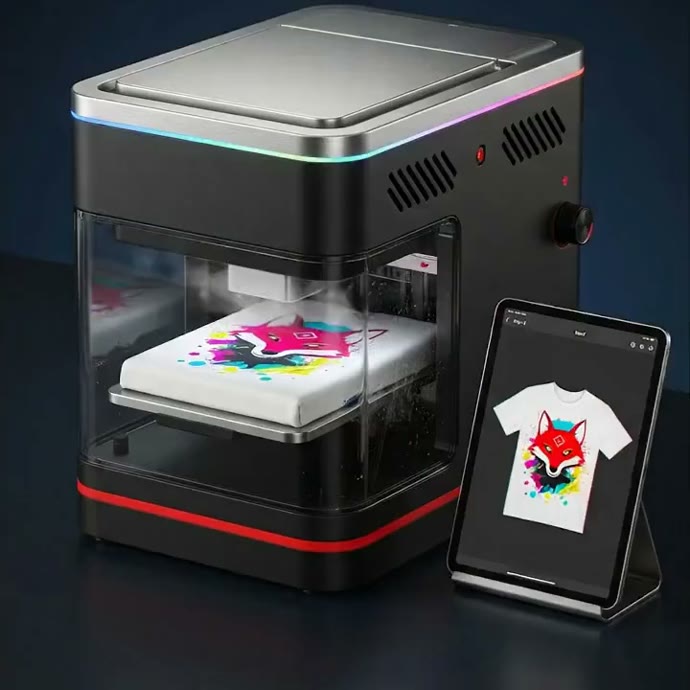
A working prototype
Business
Model + market analysis
Brand
Identity + visual direction
Growth
Marketing strategy
Funding
Pitch deck + presentation
Memory
Full venture context
All six belong to the Founder.
The working prototype is built after the session - working software for a software venture, and for a hardware venture a hardware blueprint with its software rather than a built device. A venture package is not a finished, market-ready company.
A prototype is not the finish line.
A market-ready product may still need:
InterfaceDatabaseAuthenticationPaymentsAPIsIntegrationsHosting and production infrastructureApp-store readinessHardware readiness
You own the code
All six outputs are yours, as set out in the venture's founder, IP and software agreements.
Market-ready build is a separate scope
Quoted per scope, days to weeks, and independent of any funding round.
Not every venture takes this step. None of it is automatic.
Not every product becomes a round.
Integrity
Is it honest?
Uniqueness
Why this?
Profitability
Can it become a business?
Passing means ready to be presented, not guaranteed to be funded. The review is ours; the investment decision is always the investor's.
Fund the company, not the idea.
Founder 70%
Syndicate 30%
The sum is runway, not valuation - what 18 months actually costs, published line by line.
The round is public. Offers are non-binding and start from $1, with no card up front. An indication of interest is not an investment.
At close the venture incorporates as a Delaware C-Corporation with 10,000,000 shares. Dream x Destiny holds no equity yet.
Every venture reaches its round the same way, and each is presented separately.
The final investments are completed through the applicable registered Regulation Crowdfunding intermediary - Wefunder for the current rounds - once the round closes. No return is guaranteed. We recommend understanding the model, the business plan, and the risks before investing actual money. Consider independent professional advice if needed. Dream x Destiny does not provide investment advice.
How investing works.
Discover→Show interest→Reach the funding threshold→Confirm→Invest
1 · Discover - the venture, the product, the funding requirement, the risks.
2 · Show interest - from $1. No card, no charge, no investment yet.
3 · Threshold - enough interest opens the confirmation window.
4 · Confirm - eligible investors have 7 days.
5 · Invest - The final investments are completed through the applicable registered Regulation Crowdfunding intermediary - Wefunder for the current rounds - once the round closes.
Dream x Destiny is not the securities intermediary. Regulated investments are completed through the applicable registered Regulation Crowdfunding intermediary. Dream x Destiny's platform revenue is a fixed operating fee, not a percentage of capital raised.
The funding sum is a budget, not a valuation.
Illustrative, on a $250,000 round.
Dream x Destiny operating layer - $6,200/month across 18 months
$111,600
Funding portal fee - illustrative, may vary
$19,750
Everything else the venture runs on
$118,650
Total
$250,000
That remaining budget covers AI and API infrastructure, software, marketing, legal and accounting, human-in-the-loop work at $23/hour, reserves and buffer.
Money only matters if something happens with it.
Founder - direction, in the role they choose.
Talent Pool - people who do the work, $23/hour.
AI workflows - product and analytical work, on monday.com.
Dream x Destiny - infrastructure, coordination, financial visibility.
Lumi - venture memory.
The Founder does not have to carry the entire operational burden of the startup alone. This creates more capacity for the Founder while giving the venture an operating structure designed to keep momentum after funding.
$6,200 a month across an 18-month operating period - $111,600 in total - committed inside the funding sum rather than paid at closing, and drawn from the venture's funded runway as the period runs.
Profit is measured every quarter.
Example - not live venture data
Funding sum$250,000
Total income$410,000
Total expenses−$110,000
Cumulative profit$300,000
3x Profit Checkpoint target$750,000
40% of the way to the checkpoint
Financial results are intended to be recorded quarterly and made visible to shareholders through the designated reporting system.
A stop before zero, not a panic.
Low cash→Shareholder alert→Team meeting→8-week action plan→Continue or freeze
Reviews at weeks 0, 2, 4, 6 and 8. No fixed runway cut-off.
If it is still not safe, the venture freezes before cash hits zero. Taxes, obligations, committed payments and a buffer are protected first.
Remaining distributable cash may go out pro-rata. A frozen venture can restart.
Exact accounting and legal mechanics of a freeze are subject to professional refinement.
Profit can reach shareholders before an exit.
When cumulative profit reaches 3x the original funding sum, the venture reaches a 3x Profit Checkpoint. The company may then distribute an amount equal to the original funding sum to its shareholders, pro-rata according to their ownership at that time.
The distribution is shared by all shareholders, including the Founder and the syndicate, each according to what they own. It is not a repayment priority.
Profit does not reset, so it can repeat at every further 3x.
A checkpoint is a mechanism, not a guaranteed return. A venture may reach several, one, or none at all. The 3x is the venture's cumulative profit measured against its original funding sum - it is not a 3x return on any individual investment. The checkpoint is not a repayment schedule. Shareholders participate in each distribution according to ownership at that time. Whether a distribution happens at all, and when, depends on the venture's profitability, its available cash, its governing documents and applicable law.
First profit distribution - worked example
$750,000 of cumulative profit triggers a $250,000 distribution.
3x the $250,000 funding sum is $750,000 of cumulative profit. At that point the original $250,000 is distributed pro-rata.
At the first checkpoint
Ownership thenFounder 70 · Syndicate 30
Founder receives$175,000
Syndicate receives$75,000
The syndicate receives 30% of the distribution because it owns 30% at that point. The other $500,000 of profit stays with the company.
After the first 1% event, every further distribution is pro-rata according to ownership at that time.
The distribution is equal to the original funding sum and is paid pro-rata according to ownership at that time. It is a profit distribution, not a return-of-capital preference.
Who owns what, at every stage.
First roundFounder 70%Syndicate 30%
After the first 3x Profit CheckpointFounder 69%Syndicate 30%Dream x Destiny 1%
Round 2 - illustrative, Growth Pool used in fullFounder 51%Round 2 18%Syndicate 30%Dream x Destiny 1%
The 1% comes from the Founder's ownership, taking the Founder from 70% to 69%.
The 18% Growth Pool is reserved ownership from the Founder's holding, so offering it in Round 2 does not reduce the syndicate's 30% in that round.
That does not protect the syndicate from future dilution. Round 3 and later financings may create new shares and dilute existing holders. The Round 2 row above is drawn on the ownership that follows a first 3x Profit Checkpoint.
Illustrative ownership sequence - the model, not a promised financing outcome.
Future dilution is planned before it is needed.
Reserved ownership - used to bring new capital into the company.
Where it comes from
18 points reserved from the Founder's own holding at incorporation, unused in the first round. Future financing capital goes into the company, not to the Founder.
Why it exists
The usual way - a Founder needs growth capital, has nothing set aside, and negotiates from weakness.
This way - the cost is known in advance.
The Founder knows in advance what portion of their own ownership may be used for future growth capital. It does not guarantee any future ownership percentage.
If Round 2 never happens, the Founder stays at 69% - or at 70% if the venture never reaches a first 3x Profit Checkpoint, because the 1% only arrives then. The alternative to planned dilution is not zero dilution - it is unknown dilution.
Growth capital, then normal financing.
First round closes→Incorporation→Round 2 prepared→Venture capital→Angels→Growth financing
Round 2 starts internally after successful first-round funding and incorporation.
Dream x Destiny prepares the round, seeks venture capital, seeks angels, and works to close growth financing.
The ownership offered comes from the reserved 18% Growth Pool. The capital raised goes into the company to grow it.
Illustrative: if the Growth Pool is used in full, the ownership model becomes 51% Founder · 18% Round 2 · 30% Syndicate · 1% Dream x Destiny.
Round 3 and later are normal future financing. New shares may be issued, existing holders may be diluted, and the terms are negotiated with those investors. No percentage is promised permanently.
No percentage in this deck is permanent. The ladder describes the model, not the future.
Selling your shares, and selling the company.
Selling your shares
After the applicable resale restrictions, you may be able to sell your shares if you find a buyer and the transfer is permitted. Dream x Destiny can direct you to the appropriate transaction process.
Shares issued through a Regulation Crowdfunding offering are generally subject to a one-year resale restriction, subject to statutory exceptions.
No buyer is promised, and no liquidity is guaranteed.
Selling the company
An acquisition is an exit event. Sale proceeds follow ownership and the transaction documents. An acquisition is never promised.
The 3x Profit Checkpoint exists because an exit should not be the only way profit can ever reach shareholders.
Every venture has its own memory.
Lumi helps refine the product and venture before it gets built. She remembers decisions, challenges assumptions, identifies gaps and carries the venture's context through the journey.
The User's Guide
Lives in every app. Shows people how to use it and helps when they get stuck.
The Venture Guide
Understands the venture and helps refine it. Tracks new tools and technologies that could make it better.
The Venture Memory
Remembers decisions, progress, people, product and history. The venture keeps its context as it grows.
The Ecosystem Guide
Architected, not yet running. Learns from user journeys and key metrics across the ecosystem. Shares patterns of success and friction - never private secrets.
The ecosystem is designed to learn from the pattern. Only the pattern can travel - never the secret.
Private by venture. Designed to be smarter as an ecosystem.
Source code, trade secrets, private venture records and personal data are not shared between ventures.
Three ways, in order.
$6,200/month operating layer, from the venture's funded runway for 18 months, then billed monthly.
$23/hour for talent and working roles, including the Founder's.
1% equity - only after the venture's first 3x Profit Checkpoint.
The 1% arrives last, so our equity depends on the venture actually making money.
We are built on many ventures passing the gate and funding, not on any single outcome. A gate that rejects everything leaves nothing to present; a gate that passes weak ventures costs reputation and revenue together. None of this is a promised outcome.
Own your startup. Choose your role.
The Founder keeps the majority ownership and chooses how much of the work they do.
What a Founder gets
Start from an idea, or submit an existing product.
A complete venture package, owned by you.
Founder majority through Round 2.
Market-ready development, if and when you want it.
The operating layer after funding.
Choose your role - and change it
CEO - lead the company and its direction. $23/hour.
Team Leader - lead the team and the execution. $23/hour.
Human in the Loop - work where human judgment matters most. $23/hour.
Brainstormer - stay creatively involved, no operating commitment. Unpaid.
The Founder's return is ownership. The hourly rate is the same for every working role so the runway is spent on the venture, not on salary.
The 30% buys creation, a public funding path, the operating layer, talent and memory. Whether that trade is worth it is the Founder's call.
Why this is different
Most platforms solve one part of the journey.
Each of these does its own part well. The difference is how much of the journey is connected.
AI builders
Build the product.
Crowdfunding platforms
Run the funding process.
Venture studios
Build companies, usually internally.
Dream x Destiny
Build→Review→Fund→Operate→Remember
The venture keeps its context instead of losing it at every handover - and funding is not the end of the journey.
The risks
You can lose your money.
A venture may fail, run out of money, never make a profit, need more funding, have its shares diluted, become impossible to sell, or lose most or all of its value.
The 3x Profit Checkpoint is a mechanism, not a guarantee. A sale is not guaranteed. An acquisition is not guaranteed.
Past performance of one venture does not predict another venture’s outcome.
Shares issued through a Regulation Crowdfunding offering are generally subject to a one-year resale restriction, subject to statutory exceptions. There is no guaranteed liquidity.
Quarterly reporting is the intended mechanism. No live or real-time financial feed is promised.
AI output can be wrong. AI can invent things that are not true and can misread the context. AI-generated work is reviewed by people and validated at venture level - review does not make error impossible.
The venture depends on Dream x Destiny. Software, infrastructure, AI workflows, Venture Intelligence, talent and product development may all come from the ecosystem. If those services stop being available, a venture’s operations can be seriously affected.
Read the venture’s offering documents before investing. The law, the offering documents and the signed agreements govern - DreamxDestiny.com/legal explains the model in plain English and does not override them.
Conflicts of interest
Disclosed, rather than hidden.
Dream x Destinybenefits financially when a venture is funded - a funded venture is a venture that pays the operating fee. Dream x Destiny's platform revenue is a fixed operating fee, not a percentage of capital raised.
It also runs the internal review that decides whether a venture is presented at all.
It is paid $6,200/month to operate the venture, from that venture's funded runway - a fixed amount that does not move with the size of the round.
It sources and bills the Talent Pool at $23/hour to the same ventures it reviews and operates - including the Founder's own paid working role.
Market-ready development is its own paid work, quoted per scope, sold to ventures it also gates.
Its 1% arrives only after the first 3x Profit Checkpoint - so its equity depends on the venture actually reaching profitability.
So Dream x Destiny has a financial interest in ventures being funded and succeeding. We do not hide that.
How a disputed decision gets decided.
A major decision seriously changes product, brand, model, ownership, pricing or direction.
Either side can pause one. A pause starts the process; it is not a veto.
On a disputed major decision the Founder holds 1 vote, Dream x Destiny holds 1 vote, and each syndicate investor holds 1 vote. If there is a tie the vote is held again; on a third tie in a row the CEO gets 2 votes.
Neither Dream x Destiny nor the Founder has sole control over a genuinely contested major decision. Majority ownership and control of a disputed decision are not the same thing.
Open. How syndicate investors are legally held is not settled. That determines whether one vote per investor is administrable, and the final governance structure follows from it. Exactly how voting is implemented in law is set out in the venture's governing documents.
They already exist.
We built the first 7 ourselves, to prove the pipeline.
2 live - free to use · 3 demo · 2 ready for engineer
Four people, working with the AI agents that run inside the system. The agents are what the team builds with.
Oded Livnat TalFounder · CEO & CTO
Yaeli Tal LivnatCo-Founder & Project Manager
Elad Pereg RubensHuman in the Loop
Yael Livnat ZaidmanData Analyst
“I’ve been building software and hardware since 2012, and I know what burnout feels like - your own money on development, and a long road to find investors. We built Dream x Destiny to close that gap.”
The whole model
One page. Beginning to end.
Idea or product
Operate
Round 2
▼
▼
▼
The Adventure
Quarterly Financial Pulse
Venture capital + angel capital
▼
▼
▼
Working prototype
3x Profit Checkpoint
18% Growth Pool
▼
▼
▼
Quality gate
Pro-rata distribution
Illustrative full Growth Pool use: 51% Founder · 18% Round 2 · 30% Syndicate · 1% Dream x Destiny
▼
▼
▼
First round 70 / 30
1% success equity to Dream x Destiny
Normal future financing
▼
▼
▼
Incorporation
69 / 30 / 1 after the first 3x Profit Checkpoint
Growth · profit · exit
Read down each column, then across. · The checkpoint is drawn before Round 2 because that is where the Round 2 percentages come from; the model does not require that order. · Illustrative ownership sequence - the model, not a promised financing outcome. · Business model: locked. Legal implementation: subject to professional refinement.